Most tree problems do not announce themselves clearly until they are already serious. Internal decay, root disease, pest activity, and structural weakness often develop gradually, showing few obvious symptoms until a tree is already significantly compromised. A professional tree health assessment gives property owners a clear and documented picture of every tree on their land before problems escalate into hazards. Jay Eubanks Tree Service provides thorough tree health assessment services that evaluate each tree for structural condition, signs of disease or pest activity, root health, and risk level, with practical recommendations attached to every finding.
A tree health assessment is a structured evaluation of a tree or a population of trees on a property. A trained arborist inspects each tree systematically, evaluating visible indicators of health and structural integrity from the ground and, when needed, at elevation.
The assessment covers the crown, trunk, root flare, and surrounding soil conditions. Each tree is reviewed for dead or declining branches, unusual growth patterns, fungal bodies, cankers, bark abnormalities, pest evidence, soil compaction, and root zone disturbance.
Findings are organized into a clear report that communicates the condition of each tree, identifies trees that require action, and outlines the recommended service or monitoring approach for each one. Property owners leave the assessment with an accurate, current knowledge of what they have on their land and what needs attention.
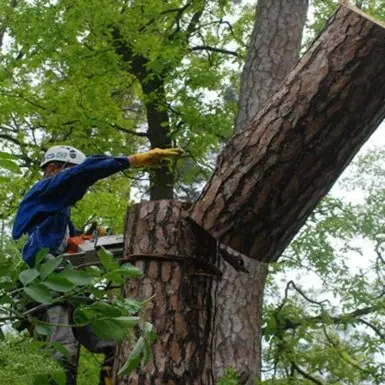
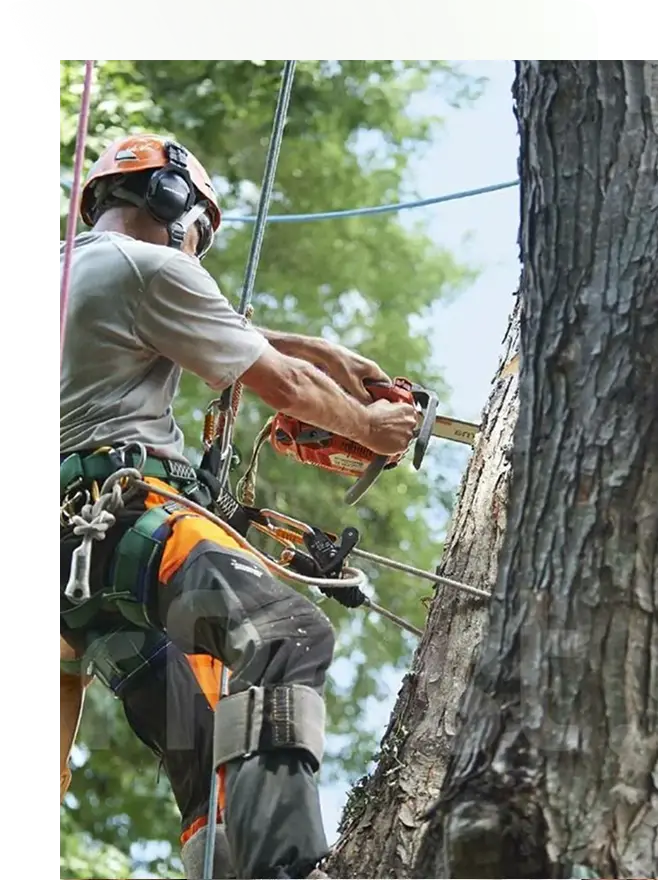
High winds, ice loading, and flooding can cause internal damage that is not immediately visible from the outside. A post-storm tree health assessment identifies trees that were compromised and may need intervention.
Buyers and sellers benefit from a documented assessment of the trees on a property. It establishes condition at a point in time and identifies any significant concerns that should be addressed or disclosed.
Thinning canopy, early leaf drop, unusual bark changes, or dead branch accumulation are signals that a tree may be experiencing health or structural problems worth investigating.
If one tree on the property is showing signs of a specific pest or disease, an assessment of the surrounding trees can determine if the issue has spread.
Property owners who want to stay ahead of tree problems rather than responding to them benefit from periodic assessments that catch developing issues early.
Taking on a property with mature trees is more manageable when you know the condition, risk level, and care requirements of what you have.
Root zone disturbance from excavation, grading, or hardscaping can stress or kill trees that appear healthy at the time of the work. An assessment beforehand helps property owners understand which trees are most vulnerable.

Our arborist walks the property and identifies every tree to be evaluated, taking note of site conditions, soil, drainage patterns, and any immediately visible concerns.

The canopy of each tree is assessed for dead branch distribution, foliage density and color, die-back patterns, and any structural anomalies visible from the ground.

The trunk is examined for cracks, cankers, fungal growth, woodpecker activity, mechanical wounds, and other indicators of internal change.
The base of each tree and the surrounding root zone are checked for surface root damage, soil compaction, grade changes, mulch volcano buildup, and signs of root decay or girdling.
Evidence of known pests or disease pathogens is noted and identified as specifically as conditions allow.
Each tree is assigned a risk designation based on its structural condition and the probability and consequence of failure given its location on the property.
Each finding is paired with a recommended action, whether that is monitoring, pruning, cabling, treatment, or removal.

Catching disease, decay, or structural weakness early gives property owners more options and lower costs than waiting until a tree becomes an emergency.

A written assessment creates a record of each tree’s condition at a point in time, which is useful for insurance purposes, real estate transactions, and long-term property management.

Knowing which trees pose the highest risk and why allows property owners to prioritize care spending where it matters most.
04
Property owners who have a clear picture of their trees’ condition make better decisions about removal, treatment, and preservation without relying on guesswork.
05
An assessment provides the foundation for a proactive tree maintenance plan that extends the life of healthy trees and addresses developing problems before they become costly.
Tree Pruning — Pruning is a common recommendation following a health assessment, addressing dead material, structural problems, and canopy overcrowding.
Tree Cabling and Bracing — Trees identified during an assessment as structurally at risk may be candidates for cabling and bracing rather than removal.
Tree Removal — When an assessment identifies a tree that cannot be made safe through other means, removal is the appropriate next step.
Tree Planting — Following removals recommended through an assessment, replanting with appropriate species restores the property’s canopy.

Jay Eubanks Tree Service conducts tree health assessments with the goal of giving property owners an honest and accurate picture of what they have. We do not recommend services that are not warranted, and we do not use assessments as a sales exercise.
Every assessment is conducted by a trained professional using systematic inspection methods. Findings are communicated clearly, recommendations are explained in plain terms, and property owners are never pressured to act on every finding at once. We help prioritize what needs attention now and what can be monitored over time.
Our team is fully insured and committed to giving property owners the information they need to make good decisions about their trees.
If your property has mature trees and you do not have a current picture of their condition, a tree health assessment is the right place to start. Contact Jay Eubanks Tree Service today to schedule your assessment.