Not every tree with a structural problem needs to be removed. Some trees with co-dominant stems, included bark, weak branch unions, or significant lean can be preserved and made safer through tree cabling and bracing. This service installs hardware support systems within the tree’s canopy and trunk structure to redistribute mechanical load, reduce the risk of failure, and extend the life of trees that have value on the property. Jay Eubanks Tree Service provides tree cabling and bracing service that follows established standards, giving property owners a responsible option for preserving trees that would otherwise become removal candidates.
Tree cabling and bracing involves installing hardware in or near a tree to provide supplemental structural support. These systems reduce movement and stress in areas of the tree where failure is most likely to occur.
Cabling typically uses high-strength steel cables or flexible dynamic systems installed between major limbs or co-dominant stems to limit the distance those parts of the tree can move relative to each other during wind events. This reduces the force placed on weak unions and minimizes the chance of splitting or failure.
Bracing uses threaded steel rods installed through weak crotches or cracked sections of the trunk to hold split or partially failed wood together, preventing the failure from progressing.
Tree cabling and bracing is not a solution for every structural problem, and it is not a permanent fix that eliminates the need for monitoring. It is a tool for managing risk in trees that are worth preserving and where removal is not the preferred or necessary outcome.
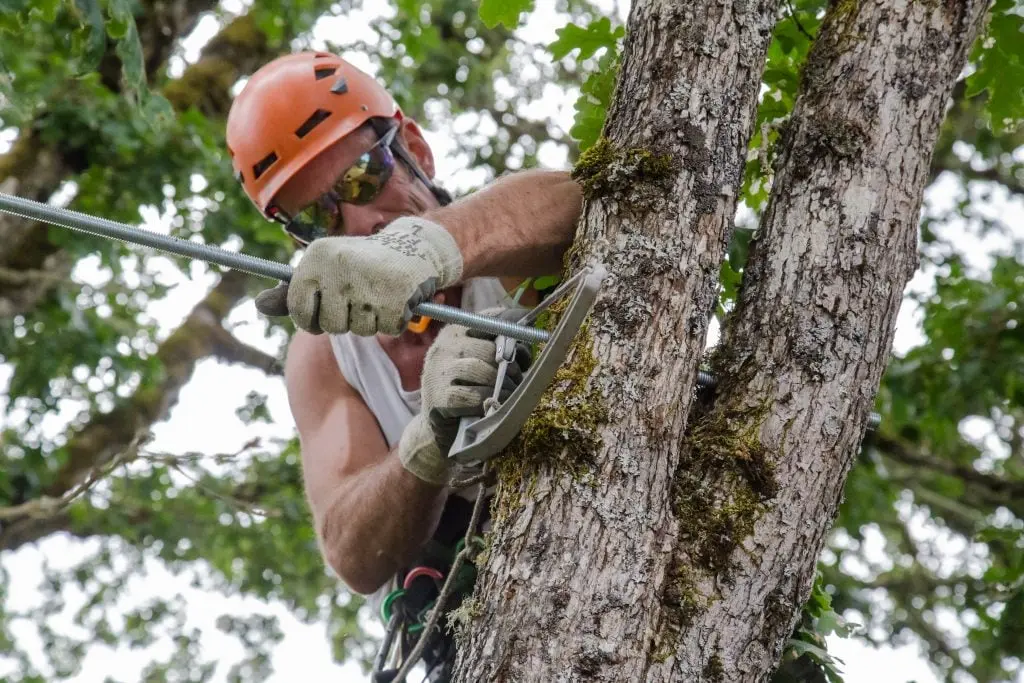
When a tree develops two or more main stems of similar diameter originating from the same point, the union between them is often weaker than a single-leader trunk. Included bark in the union further increases the risk of splitting.
A tree that has already begun to split at a branch union or trunk section may be a candidate for bracing to prevent the failure from progressing.
Large limbs extending far from the trunk in a horizontal direction carry significant weight and are prone to failure under wind, snow, or ice load.
A tree that has dropped major limbs in the past may have structural tendencies that cabling can help manage.
When a tree is positioned over a structure, vehicle parking area, or high-traffic zone and has identifiable structural concerns, cabling and bracing provides a documented management measure.
After a significant storm event, trees that sustained damage but were not destroyed may benefit from cabling and bracing as part of their recovery management.

Our team evaluates the tree’s architecture, identifies the specific failure points of concern, and determines whether cabling, bracing, or a combination of both is appropriate.

We determine the correct hardware type, installation height, and anchor points based on the tree’s structure and the load distribution goals for the system.

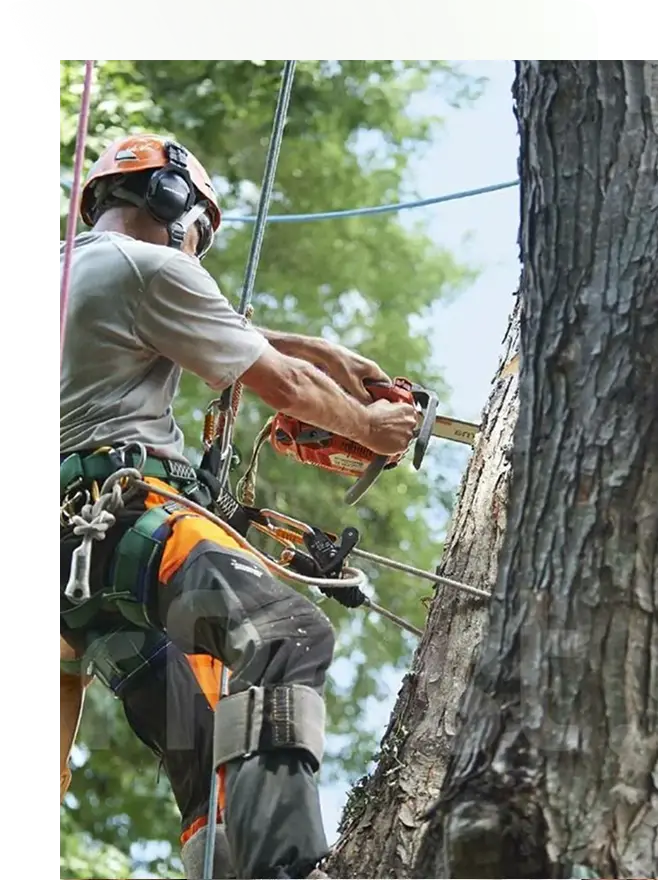
Hardware is installed at the calculated positions using proper drilling and anchoring techniques that minimize damage to the tree’s tissue while achieving the required structural connection.
We note the hardware installed, installation date, and anchor locations so the system can be monitored and inspected over time.
We advise the property owner on inspection intervals, as cabling and bracing systems require periodic review to confirm hardware integrity and assess if the tree’s structure has changed.

Tree cabling and bracing extends the life of trees that have value to the property but carry structural risk. It provides an option between doing nothing and removing the tree entirely.

Installing a properly designed cabling system meaningfully reduces the probability of failure in the supported section of the tree, which is particularly important for trees near structures or high-use areas.

A large limb or co-dominant stem that fails can cause significant damage to roofing, fencing, vehicles, or utility lines. Cabling reduces that probability.
04
Cabling and bracing is often less expensive than tree removal and, in the right situation, preserves a tree that provides long-term shade, screening, or landscape structure that would take decades to replace.
05
Professional installation includes documentation and a monitoring plan, giving property owners a clear picture of the tree’s status and what to watch for.
Tree Health Assessment — A full property assessment identifies which trees may benefit from cabling and bracing before structural problems become emergencies.
Tree Pruning — Reducing the weight of specific limbs through pruning is often done in combination with cabling to improve the overall effectiveness of the structural support system.
Tree Removal — When a tree’s structural condition is beyond what cabling and bracing can safely manage, removal is the appropriate next step.
Tree Hauling — If pruning is performed alongside cabling work, hauling can be arranged to clear the resulting debris.
Jay Eubanks Tree Service evaluates cabling and bracing needs carefully before recommending a system. We do not install hardware where it will not meaningfully reduce risk, and we do not use cabling as a reason to defer a removal decision that is clearly the right call.
Our team is fully insured, uses proper hardware and installation methods, and provides documentation with every cabling and bracing installation. We follow established industry standards and communicate clearly with property owners about what the system does, what it does not do, and what monitoring is required.
If you have a tree with structural concerns that you want to preserve, our team can assess the situation and recommend the right approach. Contact Jay Eubanks Tree Service for a free consultation.